Iranian Cement in the Russian Market: Quality, Grades and Supply Terms
In recent years, cement produced in Iran has become a familiar product in the construction-materials market of southern Russia. In the Astrakhan region, in Makhachkala and Dagestan more broadly, and in Volgograd, many building-materials retailers now stock Iranian cement alongside domestic Russian output. The main reasons are a combination of competitive pricing, geographic proximity via the Caspian Sea and the North–South transport corridor, and — most importantly — a defined mechanism that verifies the product's quality before it ever reaches the Russian market.
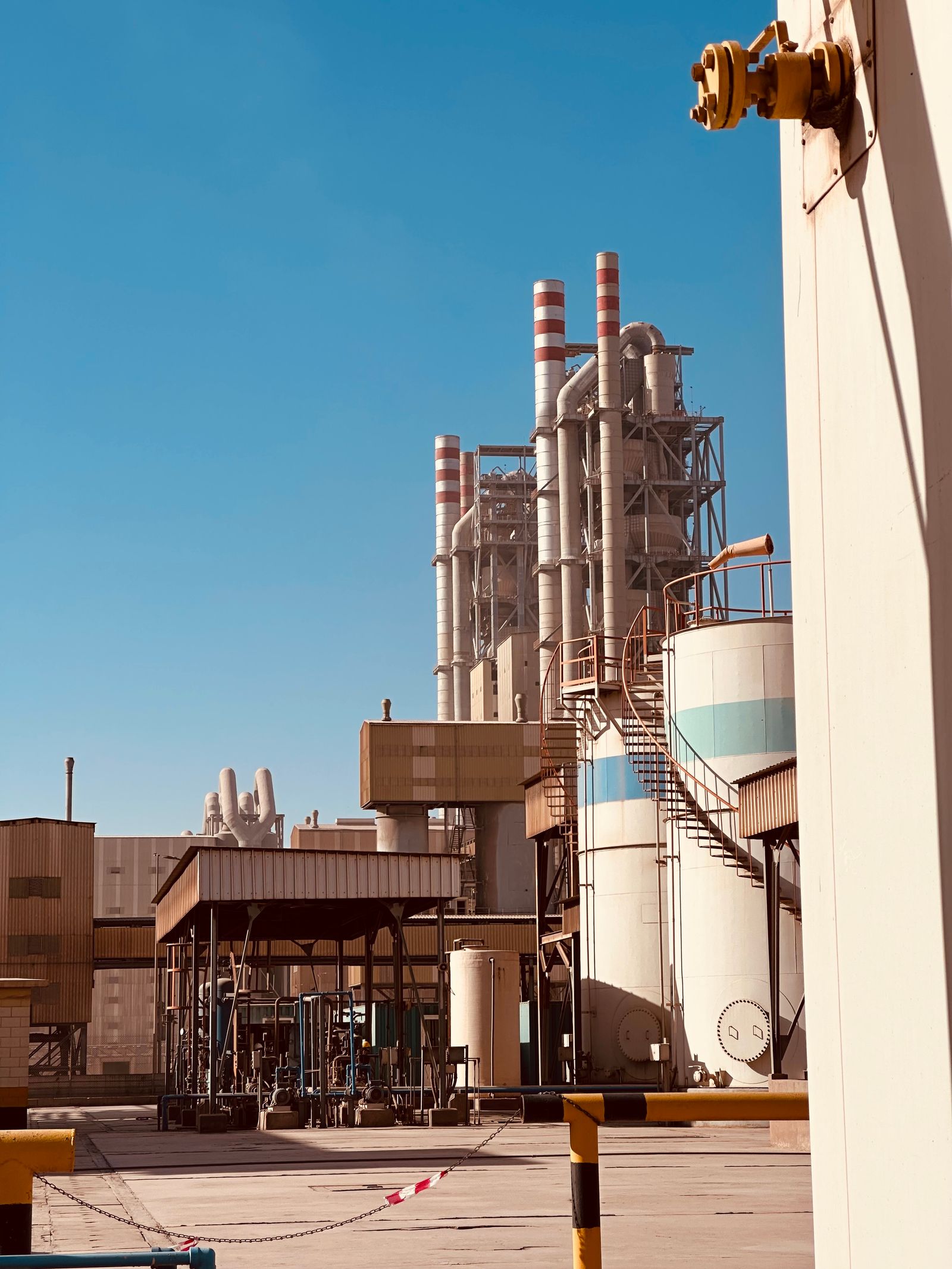
Product quality is verified through laboratory testing before the shipment leaves for Russia
Quality assurance before the shipment arrives
Every batch of cement imported from Iran must obtain an official GOST conformity document before customs clearance and sale on the Russian market. This requirement means that, contrary to the common assumption about imported goods, the quality of Iranian cement sold in Russia varies little between different factories — because all of them must pass through the same laboratory filter.
The process behind this certificate is fairly rigorous. A Russian importing company first signs a representation agreement with an Iranian cement plant and is formally recognized as that plant's import representative in Russia. The plant's technical documentation — production licenses, internal standards, and test records — is then carefully reviewed. Qualified experts and inspectors are subsequently sent to the plant in Iran to take samples directly on site. These samples are shipped to Russia, declared through customs, and subjected to a 28-day testing cycle at an accredited laboratory. The conformity certificate is issued only if the sample fully meets every technical parameter — compressive strength, fineness of grinding, density, magnesium oxide and sulfur trioxide content, and free lime content.
The practical outcome for a building-materials retailer is straightforward: cement that enters the market with a valid GOST certificate is predictable and consistent in quality, regardless of which Iranian plant it came from.
Iranian cement grades: the difference between M500 and M600
Two grades of Iranian cement are most common in the Russian market: M500 and M600. This designation refers to the cement's strength class — the higher the number, the greater the standard compressive strength of concrete made from it.
M500 is the most widely used grade in general construction — from foundations and masonry to mortar and plaster — and accounts for the bulk of market demand in Russia. M600 is a higher-strength grade used mainly in specific structural projects, precast concrete production, and applications requiring higher compressive strength and faster setting; its supply volume is smaller than M500 and it is typically priced higher.
Packaging and pricing
Iranian cement exported to Russia is typically shipped and sold in 1.5-tonne big bags. This packaging format simplifies handling with cranes and forklifts at ports, warehouses and construction sites, and reduces transport and loading costs compared with smaller sacks.
The selling price of a big bag of Iranian cement on the Russian market typically ranges between 11,300 and 12,000 rubles, depending on the grade, the producing plant, the season, and the exchange rate. This range can serve as a useful benchmark for retailers comparing different offers.
For building-materials retailers in southern Russia, Iranian cement is no longer an unfamiliar option. The GOST certification mechanism provides a transparent, traceable process for verifying quality, which — combined with competitive pricing and packaging suited to transport — has made this product an established part of the supply mix for building-materials stores.
Universal Partner's track record in cement import certification
The Universal Partner team has so far successfully supported more than 5 Iranian cement plants in obtaining import representation with Russian companies and in securing the GOST conformity certificates required for import, working with accredited certification bodies. If you have any questions on this topic, feel free to reach us.
Contact us: info@upbc.ru